50">
Premium processed fly ash compliant with IS 3812 : Part 1 and BS 3892 : Part 1. Trusted by India's leading RMC plants, infrastructure contractors, and precast manufacturers for over 3 decades.
At a Glance
Fly Ash is a fine, powdery by-product captured from the flue gases of coal-burning thermal power plants. It is a highly reactive pozzolanic material — meaning it reacts with calcium hydroxide released during cement hydration to form additional cementite compounds.
Ashcrete Fly Ash is carefully sourced, processed, and classified at our facilities to meet the exacting requirements of IS 3812 : Part 1 (India) and BS 3892 : Part 1 (UK/Export). Each lot is tested in our quality lab before dispatch.
Available in bulk tanker loads for RMC plants or bagged supply for smaller sites. We supply across Delhi NCR, pan-India, and export to Africa and the Middle East.
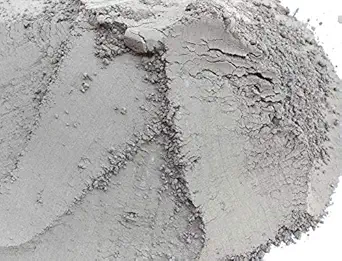
Ashcrete Fly Ash delivers technical, economic, and environmental advantages over plain OPC concrete.
Replace up to 35% cement, significantly cutting material costs without compromising strength.
Ideal for mass concrete — reduces thermal cracking in large pours like dams, rafts, and pile caps.
Spherical particle shape acts as a lubricant, enhancing flow and reducing water demand.
Reduced permeability and improved resistance to chloride ingress, sulphate attack, and alkali-silica reaction.
Pozzolanic reaction continues for months, often surpassing OPC concrete strength at 90 days.
100% utilisation of industrial by-product — reduces landfill burden and CO₂ emissions per tonne of concrete.
All parameters are tested per IS 3812 : Part 1 : 2003 and BS 3892 : Part 1 : 1997. Test reports and batch certificates are available on request.
| Parameter | Value / Limit |
|---|---|
| Standard | IS 3812 : Part 1 / BS 3892 : Part 1 |
| Grade | Grade I & Grade II |
| Colour | Light Grey to Dark Grey |
| Specific Gravity | 1.90 – 2.55 |
| Fineness (45µ residue) | ≤ 34% (IS) / ≤ 12% (BS) |
| Loss on Ignition | ≤ 5% (IS Grade I) |
| Moisture Content | ≤ 1.0% |
| Lime Reactivity | ≥ 4.5 N/mm² |
| Compressive Strength | ≥ 80% of control at 28 days |
| Soundness (Le Chat.) | ≤ 10 mm |
* Values are indicative. Actual test certificates provided with each supply.
Download the complete TDS including test methods, mix design guidelines, and application notes for Ashcrete Fly Ash.
Request TDS / Test ReportsAshcrete Fly Ash is trusted across a wide range of construction types and infrastructure sectors.
Partial replacement of OPC in RMC plants for improved workability and reduced heat of hydration.
Enhanced chloride resistance and long-term strength gain in prestressed and reinforced structures.
Used in pavement quality concrete and stabilised subgrade for improved durability.
Reduces water demand and improves pumpability in high-rise concrete pours.
Superior sulphate resistance and reduced permeability in underground structures.
Fly ash bricks, blocks, pavers — lighter weight with equivalent or better compressive strength.
Grade I (as per IS 3812) has finer particle size and lower loss on ignition (≤ 5%), making it suitable for structural concrete. Grade II is coarser and used in non-structural applications like bricks and fills.
Typically 20–35% of OPC by weight in structural concrete. For mass concrete applications (dams, thick rafts), replacement levels up to 50–60% are used with appropriate mix design.
Fly Ash concrete gains strength more slowly in early days (3–7 days), but typically matches and exceeds OPC concrete strength at 28–90 days due to the ongoing pozzolanic reaction.
When stored in dry, covered conditions (silos or covered sheds), fly ash has an indefinite shelf life. Exposure to moisture can cause hydration and reduce reactivity.
Yes — fly ash concrete shows significantly better chloride penetration resistance than plain OPC concrete, making it preferred for marine and coastal structures.
Tell us your requirement — volume, location, grade, and supply frequency. Our team will respond within one business day with pricing and logistics details.